Publisering
An Introduction to the Hoopoe: Nature's Crowned Aviator
The Hoopoe (Upupa epops) is a remarkably vibrant bird found throughout Afro-Eurasia. It is most famous for its distinctive "crown" of feathers, an ornate crest that it can raise or lower at will.
Logan Matthew Turner
Signatur
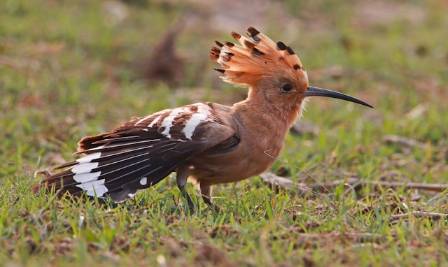
The Hoopoe (Upupa epops) is a remarkably vibrant bird found throughout Afro-Eurasia. It is most famous for its distinctive "crown" of feathers, an ornate crest that it can raise or lower at will.
As the sole living representative of the Upupidae family, the Hoopoe holds a unique place in the avian world. While a larger relative, the Giant Hoopoe, once lived on Saint Helena, it has unfortunately gone extinct. The bird’s name is derived from the Latin word upupa, an onomatopoeia that mimics its soft, repetitive vocalization.
Taxonomic Classification and Diversity
The Hoopoe is part of the Coraciiformes order, a diverse group of birds that includes kingfishers, bee-eaters, and rollers. Extensive scientific research suggests they are the closest relatives to woodhoopoes, sharing specialized anatomical features such as a unique ear bone structure.
Currently, experts recognize nine distinct subspecies of Hoopoes. These variations are primarily distinguished by their physical dimensions and the specific intensity of their plumage colors, with some subspecies appearing larger or more vividly hued than others.
Global Distribution and Habitat
Hoopoes occupy a vast geographical range that encompasses Europe, Asia, and most of Africa, including Madagascar. Their migratory patterns vary by region; those residing in Europe and northern Asia travel to warmer southern climates during the winter months, whereas African populations typically remain in their territories year-round.
These birds are highly adaptable and can be found in a variety of environments, from savannas and grasslands to forest clearings and even man-made landscapes like orchards and olive groves. They require two essential elements for a home: open ground with minimal vegetation for foraging and vertical structures—such as trees, cliffs, or walls—containing cavities for nesting.
Foraging and Dietary Preferences
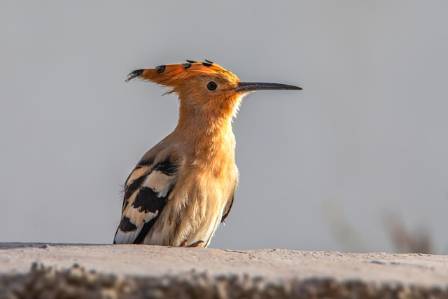
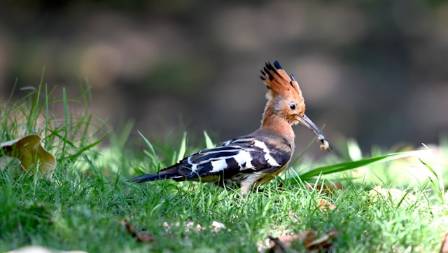
The Hoopoe is primarily an insectivore. Its diet consists largely of crickets, beetles, ants, and grasshoppers, though it occasionally consumes small frogs, reptiles, or plant matter like seeds. Using its long, curved beak, the bird probes the soil to extract larvae or pupae hidden beneath the surface.
If a piece of prey is particularly large or difficult to manage, the Hoopoe will strike it against a hard surface, such as a rock. This behavior serves to kill the insect and remove indigestible parts like legs or wings before consumption. While they usually forage solo on the ground, their strong, rounded wings also allow them to snatch insects mid-flight.
Behavioral Traits and Defense Mechanisms
Hoopoes have several interesting daily habits. They are fond of sunbathing, a process where they flatten their bodies against the ground and spread their wings to soak up heat. They also engage in dust bathing to maintain their feathers.
When it comes to protection, the Hoopoe has developed some truly unique—and pungent—defenses. During the nesting period, females and their chicks produce a liquid that smells like rotting meat. They preen this secretion into their feathers to discourage predators and prevent bacterial growth. Additionally, young chicks can defend themselves by spraying waste at intruders or making hissing sounds to mimic snakes.
Breeding and Life Cycle
Hoopoes are generally monogamous during the breeding season and are fiercely territorial. Males will use their calls to mark their domain and may engage in physical combat, using their beaks as weapons to drive away rivals.
Nests are built in holes with narrow entrances to keep the occupants safe. The number of eggs laid depends on the latitude; birds in cooler northern regions may lay up to twelve eggs, while those in tropical climates usually lay about four. The female is responsible for incubating the eggs, which take about 15 to 18 days to hatch.
Once the chicks arrive, they are covered in soft down. Both parents eventually share the responsibility of bringing food to the nest. The young birds are ready to fly within 26 to 29 days and typically stay with their parents for an additional week before becoming fully independent.
Andre saker du kanskje liker

Classic Cars: Timeless Treasures and Smart Investments
Purchasing a vintage automobile might seem indulgent, but it can be a savvy financial move. Unlike most depreciating assets, many iconic vehicles from decades past are increasing in value thanks to their limited availability and enduring appeal.

Watercolour florals for beginners
Painting floral subjects in watercolor fits beautifully with a modern, loose painting approach. This style encourages freedom in brushwork and takes full advantage of watercolor’s natural ability to blend and flow. Flowers were the very first subject I wanted to paint as a beginner, and they’ve remained one of my favorite themes ever since.

Blue Health: The Wellness Benefits of a Seaside Getaway
Oh, there's something magical about the seaside... We all cherish the opportunity to escape to the beach, armed with buckets and shovels, surfboards in tow, or a picnic basket to relish under the sun, with sand between our toes. But have you ever pondered why we are irresistibly drawn to the shore? The coast is not just a picturesque playground associated with relaxation and leisure; there's a mounting body of scientific evidence demonstrating that being near the sea has concrete advantages for both our physical and mental well-being

DESIGN EVOLUTION: 80 YEARS OF JAGUAR
Eighty years of Jaguar is a legacy stitched together with iconic design—each curve, grille, and silhouette balancing heritage and innovation. While the brand has evolved with tastes, tech, and regulations, the thread connecting its past to today’s models remains unbroken. This second chapter focuses on the 1960s and beyond, a pivotal era that didn’t just shape Jaguar’s design language but cemented it as an automotive art form. These decades turned Jaguar from a carmaker into a guardian of elegance, performance, and daring—qualities that still define its identity.

Advancing Industrial Robotics: High-Performance Automation for Unstructured Environments
Modern global commodity markets are increasingly competitive, placing significant strain on both conventional production methods and the human workforce. While safety expectations in the mining and metals sectors are rising, the physical demands on operators often subject them to substantial risks. Many of these roles require human judgment and dexterity that are notoriously difficult for standard machines to replicate, making complete automation a persistent challenge.

Dancing Lights Above
In the darkest months of winter, when the sun doesn't rise above the horizon in the polar regions, the night sky comes alive with a breathtaking natural phenomenon—the aurora borealis. These shimmering ribbons of light, often in shades of green, pink, and purple, dance across the heavens, creating a spectacle that has captivated human imagination for centuries. But beyond their beauty, auroras are a window into the dynamic interactions between our planet and the cosmos.
4 Surprising Factors Of Owls
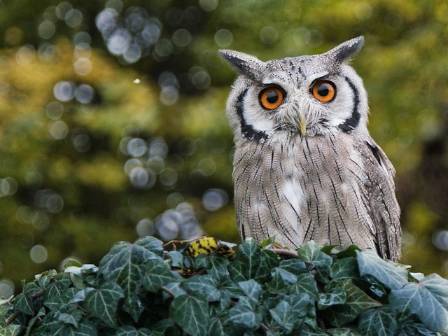
Embark on a mesmerizing journey as we unravel the enigmatic realm of owls, creatures shrouded in mystery and adorned with captivating allure. From their ancient origins etched in cave paintings to their symbolic presence on coins and vases, owls have mesmerized humanity for centuries. Let us delve into the realm of these formidable predators and explore the fascinating facts that set them apart in the avian kingdom.

6 Iconic Marvels of Ottoman Architecture
The Ottoman Empire left behind an extraordinary architectural legacy that blended Islamic, Persian, and Byzantine influences. From mosques to palaces, bridges to caravanserais, these structures were more than just buildings—they were symbols of imperial ambition, artistic vision, and cultural power. Here are six highlights that showcase the brilliance of Ottoman design.

The Transformation of T20 Cricket
Since its debut, the Twenty 20 (T20) format has served as both a disruptor and an innovator within the world of cricket. When T20 cricket was introduced, it offered a faster-paced alternative, drawing fans who found longer formats less engaging. It also sought acceptance in countries where traditional "5-day" Test matches were still viewed as the pinnacle of the sport. However, despite its groundbreaking start, the evolution of T20 cricket has been relatively gradual.

Men’s Holiday Shirt Style Guide 2025: Effortless Style for Every Destination
The holiday shirt is more than just a wardrobe staple—it’s a statement of relaxation, confidence, and adaptability. Whether you’re jetting off to a sun-soaked beach, exploring a bustling European city, or embarking on a lads’ getaway, the right shirt can elevate your look while keeping you comfortable in any climate. Let’s be honest: we’ve all been there—rushing to buy new shirts before a trip, only to end up with pieces that clash with the destination, feel uncomfortable in the heat, or scream “tourist” to locals. But fear not, weary traveler: this guide is here to simplify your holiday wardrobe, helping you choose shirts that blend style, functionality, and personality. From fabric choices and fit tips to destination-specific looks and packing hacks, we’ll cover everything you need to know to dress like a seasoned globetrotter—without sacrificing comfort or individuality.